
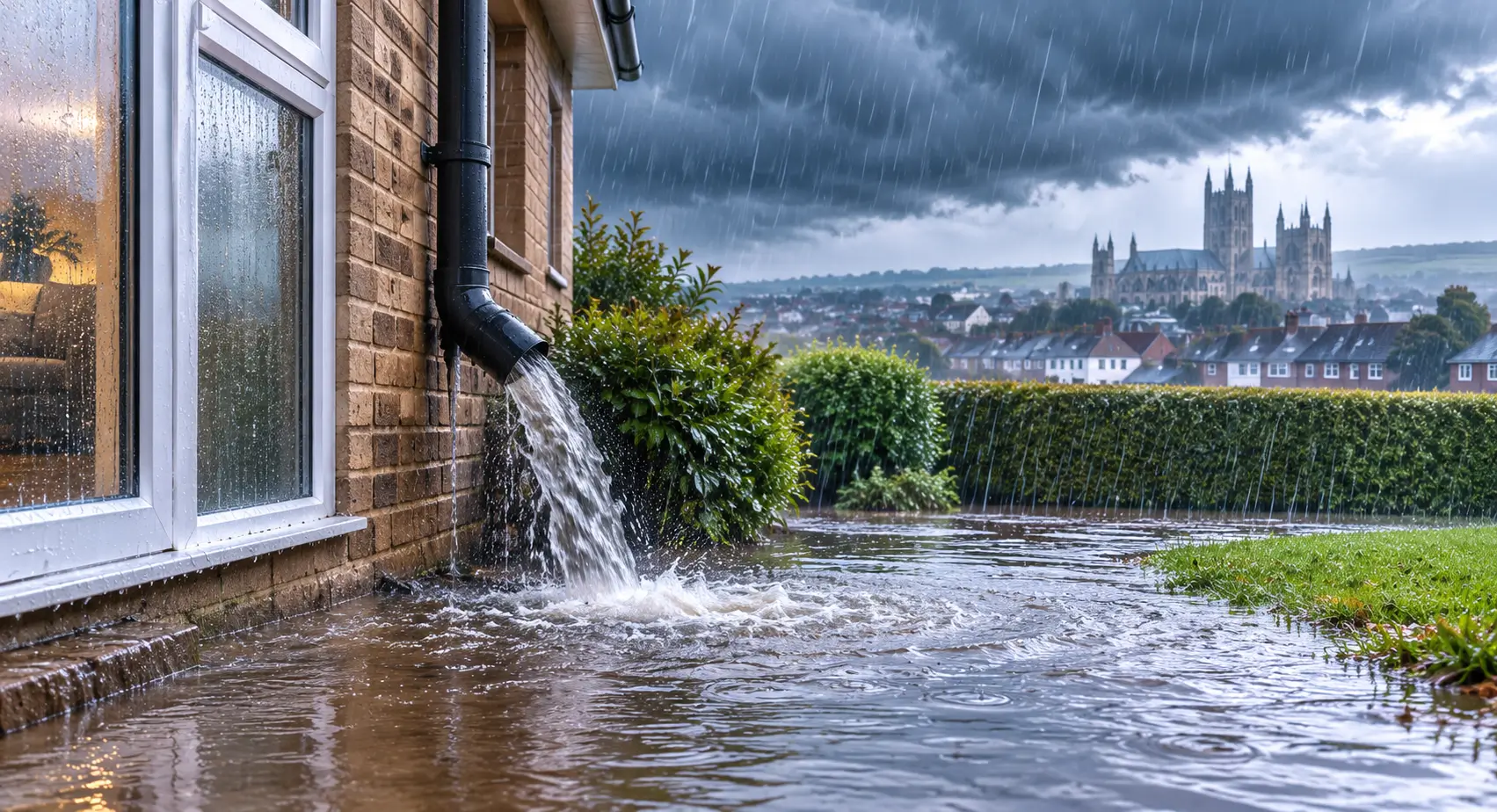
The effects of climate change are becoming increasingly noticeable across the UK, and Kent is no exception. While many people associate climate change with rising temperatures or coastal erosion, one of the biggest impacts is happening beneath our feet. More frequent heavy rainfall, prolonged wet periods and sudden storms are placing greater pressure on drainage systems that were often designed decades ago.
Across towns including Margate, Ramsgate, Broadstairs, Canterbury and the wider Thanet area, homeowners and businesses are experiencing blocked drains, overflowing gullies and localised flooding more often than ever before. Even properties that have never previously suffered drainage issues can suddenly find themselves dealing with standing water or slow-draining systems after periods of intense rainfall.
Understanding why these problems are becoming more common can help property owners take preventative action before small drainage issues develop into expensive repairs.
Why Heavy Rainfall Is Becoming a Bigger Problem
Climate experts have identified a clear trend towards more intense rainfall events across the UK. Instead of steady rain spread over several days, storms are increasingly delivering large amounts of water within just a few hours.
This creates several challenges for drainage systems.
Surface water drains can quickly become overwhelmed when rainfall exceeds their designed capacity. Leaves, mud and debris washed into gullies during storms can also create blockages that restrict water flow. Once water has nowhere to go, it begins collecting on roads, driveways and around building foundations.
Many drainage systems installed several decades ago simply were not designed to cope with today’s increasingly unpredictable weather patterns.
Older pipework may also contain minor defects that remain unnoticed during normal conditions but become significant when large volumes of water pass through the system. Small cracks, displaced joints or partial blockages can rapidly develop into complete drainage failures during periods of heavy rainfall.
The Hidden Warning Signs Homeowners Should Never Ignore
Drainage problems rarely appear overnight.
Most systems provide warning signs long before complete blockages or flooding occur. Recognising these early indicators can save considerable time, inconvenience and repair costs.
Some of the most common warning signs include:
- Water taking longer to drain from sinks or baths
- External gullies remaining full after rainfall
- Persistent unpleasant smells around inspection chambers
- Overflowing gutters during moderate rain
- Damp patches appearing near external walls
- Standing water on driveways or patios
- Gurgling noises from internal pipework
These symptoms often indicate that the drainage system is already under strain. While the property may continue functioning during dry weather, heavy rainfall can quickly expose underlying problems.
Regular inspections can identify these issues before emergency call-outs become necessary.
Tree Roots Are Becoming a Growing Threat
Warmer temperatures and longer growing seasons are encouraging stronger root growth from many trees and shrubs.
Although roots do not actively seek out drains, they naturally grow towards moisture. Tiny cracks or loose joints within underground drainage pipes allow small amounts of water to escape, attracting nearby roots.
Once roots enter a drainage pipe, they continue expanding inside the system.
Over time they trap toilet paper, grease, leaves and other debris, eventually creating serious blockages that can significantly reduce water flow.
Without professional removal, root intrusion can eventually crack or collapse sections of pipework, requiring excavation and replacement.
Regular CCTV drain surveys are becoming increasingly valuable for detecting root intrusion before major structural damage occurs.
Why Preventative Drain Maintenance Saves Money
Many property owners only contact drainage specialists once a blockage has already developed.
Unfortunately, emergency repairs are usually more disruptive and expensive than preventative maintenance.
Routine drain cleaning removes accumulated grease, silt and debris before they restrict water flow. CCTV surveys can identify structural weaknesses while repairs remain relatively straightforward. Regular maintenance also helps prevent unexpected drainage failures during periods of severe weather.
Commercial premises, restaurants and larger residential developments particularly benefit from scheduled maintenance because higher daily usage naturally increases the risk of gradual blockages developing over time.
Preventative maintenance also provides peace of mind during winter, when storms are typically more frequent and drainage systems face their greatest demands.
Protecting Your Property During Severe Weather
Although nobody can control the weather, there are several practical steps homeowners can take to reduce drainage risks.
Simple preventative measures include:
- Keeping external gullies free from leaves and debris
- Cleaning gutters regularly throughout autumn
- Avoiding pouring fats, oils and grease into sinks
- Only flushing toilet paper down toilets
- Arranging periodic professional drain inspections
- Addressing slow drainage before it becomes a blockage
- Monitoring external drains after heavy rainfall
Properties surrounded by mature trees may benefit from more frequent inspections, particularly if drainage systems are older.
Businesses should also ensure external drainage remains clear, especially in customer car parks where standing water can create safety hazards.
Professional Drain Surveys Are Becoming More Important
Modern CCTV technology allows drainage specialists to inspect underground pipework without excavation.
High-definition cameras travel through the drainage system, identifying blockages, root intrusion, cracked pipes, displaced joints and collapsed sections that would otherwise remain hidden underground.
Rather than guessing the cause of a recurring drainage problem, CCTV surveys provide precise information that allows targeted repairs.
This reduces unnecessary excavation and often lowers overall repair costs.
As weather conditions become increasingly unpredictable, more homeowners are choosing proactive surveys to assess the condition of ageing drainage systems before major problems develop.
Looking Ahead
Changing weather patterns mean drainage systems across Kent are likely to face increasing pressure in the years ahead. While many existing systems continue to perform well, heavier rainfall and more frequent storms are exposing weaknesses that previously went unnoticed.
The good news is that most drainage problems can be identified and resolved before they become emergencies.
Regular maintenance, early intervention and professional inspections remain the most effective way to protect homes and businesses from unexpected drainage failures. Whether it’s clearing developing blockages, investigating recurring slow drains or carrying out detailed CCTV surveys, taking action early is almost always less costly than waiting for a complete drainage failure.
With preventative care and expert support when needed, homeowners across Thanet can help ensure their drainage systems continue performing reliably whatever the British weather brings.