
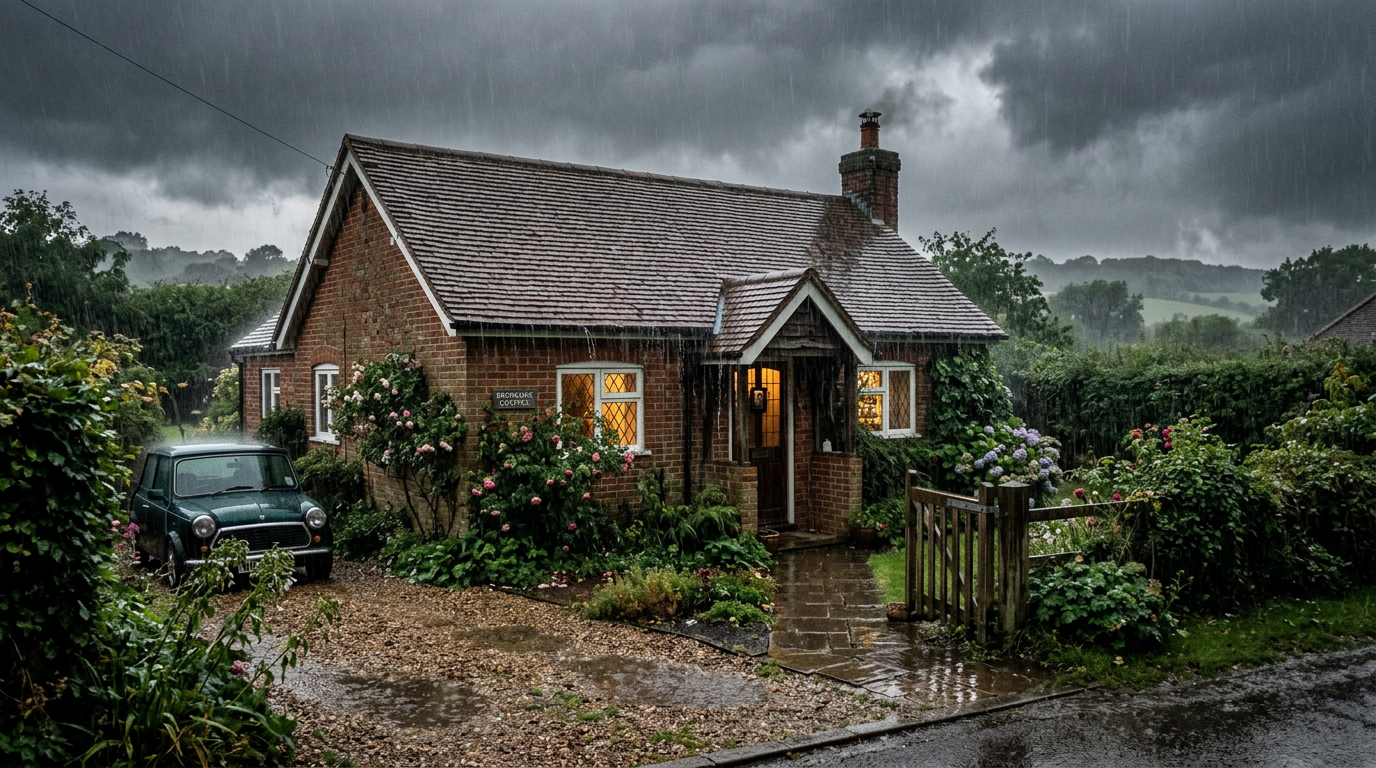
When a heavy storm rolls in, most Kent homeowners head inside, grab a warm drink, and watch the rain from the comfort of the sofa. But while you are relaxing, your house is at war. Thousands of gallons of water pound against your roof, rush down your brickwork, and pool around your foundations.
If your home’s defence systems aren’t ready, that water will find a way inside. Basement floods, ruined drywall, cracked foundations, and mould growth are incredibly costly to fix—but they are also entirely preventable.
To protect your property, you optimally need the big three of residential drainage: gutters, slopes, and sump pumps. Here is your ultimate guide to building an ironclad defence against heavy rain.
Layer 1: Gutters & Downspouts (The Roof Defense)
Your roof acts like a massive funnel. During a heavy downpour, a standard roof can catch thousands of gallons of water. Your gutters are the first line of defense, responsible for capturing that water and directing it safely away.
The Flaw:
Clogged or undersized gutters. When leaves, twigs, and debris block the flow, water cascades over the sides. It drops straight down next to your foundation, which is the exact worst place for it to go.
The Fix:
Clean them twice a year: Ensure your gutters are completely clear before the autumn leaves fall and right before the spring rainy season.
Extend your downspouts: A downspout that dumps water right at the base of your house is useless. Extend your downspout nozzles so they deposit water at least 5 to 6 feet away from the foundation.
Check the pitch: Gutters shouldn’t be perfectly flat. They need a slight downward slope toward the downspout (about 1/4 inch of drop for every 10 feet) so water doesn’t pool and overflow.
Layer 2: Grading & Slopes (The Ground Defense)
Once water safely exits your downspouts, the ground takes over. This is where many homeowners run into trouble without realising it. Over time, soil settles, paving sinks, and landscapes shift, often creating a “bowl effect” around the house.
The Flaw:
Negative grading. If the ground around your home slopes toward your foundation rather than away from it, gravity will pull every drop of rain straight toward your basement walls.
The Fix:
Establish a positive slope: The ground should drop at least 6 inches over the first 10 feet away from your home’s foundation.
Pack it with clay: If you need to build up the ground next to your house, don’t just use loose topsoil or mulch—water flows right through them.
Use a dense soil mix with clay content to shed water away.
Consider a French Drain: If your yard is naturally flat or sits at the bottom of a hill, a French drain—a gravel-filled trench containing a perforated pipe—can catch subsurface water and safely redirect it to a lower point on your property or a storm drain.
Layer 3: The Sump Pump (The Ultimate Inside Defense)
Even with perfect gutters and a flawless slope, prolonged or extreme rainfall can cause the water table beneath your home to rise. When hydrostatic pressure builds up under your concrete basement floor, water will try to force its way through tiny pores and cracks. This is where your sump pump steps in.
The Flaw:
Pump failure during a power outage. Sump pumps run on electricity. Unfortunately, severe storms that cause heavy flooding are the exact same storms that knock out power lines.
The Fix:
Install a battery backup: Never rely solely on a single, plug-in sump pump. A battery-powered backup pump will automatically kick on if the power dies or if the main pump gets overwhelmed by a massive influx of water.
Test the float switch: Pour a bucket of water into your sump pit to make sure the pump automatically turns on and drains the water quickly.
Do this at least once a year.
Check the discharge line: Make sure the pipe leading out of your house isn’t frozen, clogged, or dumping water right back against the exterior wall.
Don’t Wait for the Next Storm to Test Your System
The absolute worst time to find out your drainage system is broken is when you are standing in two inches of water in your basement with a flashlight.
Take an afternoon while the weather is clear to walk around your home. Walk your gutters, check the slope of your soil, and pour a bucket of water down your sump pit. By taking care of these three areas today, you can sit back, relax, and enjoy the sound of the next heavy rainstorm, knowing your home is safe.
Want Us to Bulletproof Your Home Before the Next Big Storm?
can you think of an interesting article topic for a drainage company
Here are a few engaging, high-interest article topics for a drainage company, grouped by the target audience and the specific goal of the piece:
🌟 High-Engagement & “Wow” Factor
The Secret Underground World: What Actually Happens to Water After It Hits Your Drain?
Why it works: People love seeing “behind the curtain.” This can trace a drop of rain from a roof gutter, through the hidden pipe networks under the street, and back to nature.
Sponge Cities vs. Concrete Jungles: How Your Town is Fighting the Next Great Flood.
Why it works: It connects your company’s everyday work to a massive, trending global conversation about climate change, engineering, and the future of cities.
🏡 For Homeowners (Practical & Actionable)
The Silent Foundation Killer: 5 Warning Signs of Poor Yard Drainage You’re Ignoring.
Why it works: It creates healthy urgency. Homeowners care deeply about property value and expensive repairs (like cracked foundations), making this a highly clickable topic.
Gutters, Slopes, and Sump Pumps: A Homeowner’s Ultimate Defense Against Heavy Rain.
Why it works: It provides a comprehensive, easy-to-understand checklist that helps readers audit their own homes before a big storm hits.
🛠️ Behind-the-Scenes & Technology
From Roombas to Radars: The High-Tech Gadgets Modern Drain Technicians Use.
Why it works: It dispels the myth that drainage work is just shovels and mud. Showcasing sewer cameras, robotic cutters, and trenchless technology positions your company as cutting-edge experts.
The Weirdest Things Ever Found Blocking Main Drains (And How to Avoid Your Own Blockage).
Why it works: A bit of humor and bizarre trivia (like “fatbergs” or tree root invasions) makes drainage fascinating and shareable on social media.
To help narrow this down and pick the perfect angle, could you tell me a little more about your goals?
Who is your primary audience? (e.g., residential homeowners, commercial property managers, or local municipalities?)
What is the main goal of the article? (e.g., to attract local Google search traffic, share on social media, or build trust with existing clients?)
Is there a specific service you want to highlight? (e.g., French drains, emergency unblocking, or commercial stormwater management?)
AI responses may include mistakes. Learn more
can you write me “Gutters, Slopes, and Sump Pumps: A Homeowner’s Ultimate Defense Against Heavy Rain”please
Here is a comprehensive, homeowner-focused article designed to be engaging, highly readable, and actionable.
Gutters, Slopes, and Sump Pumps: A Homeowner’s Ultimate Defense Against Heavy Rain
When a heavy storm rolls in, most people head inside, grab a warm drink, and watch the rain from the comfort of the sofa. But while you are relaxing, your house is at war. Thousands of gallons of water are pounding against your roof, rushing down your siding, and pooling around your foundation.
If your home’s defense systems aren’t ready, that water will find a way inside. Basement floods, ruined drywall, cracked foundations, and mold growth are incredibly costly to fix—but they are also entirely preventable.
To protect your property, you need to master the big three of residential drainage: Gutters, Slopes, and Sump Pumps. Here is your ultimate guide to building an ironclad defense against heavy rain.
Layer 1: Gutters & Downspouts (The Roof Defense)
Your roof acts like a massive funnel. During a heavy downpour, a standard roof can catch thousands of gallons of water. Your gutters are the first line of defense, responsible for capturing that water and directing it safely away.
The Flaw: Clogged or undersized gutters. When leaves, twigs, and debris block the flow, water cascades over the sides. It drops straight down next to your foundation, which is the exact worst place for it to go.
The Fix:
Clean them twice a year: Ensure your gutters are completely clear before the autumn leaves fall and right before the spring rainy season.
Extend your downspouts: A downspout that dumps water right at the base of your house is useless. Extend your downspout nozzles so they deposit water at least 5 to 6 feet away from the foundation.
Check the pitch: Gutters shouldn’t be perfectly flat. They need a slight downward slope toward the downspout (about 1/4 inch of drop for every 10 feet) to ensure water doesn’t pool and overflow.
Layer 2: Grading & Slopes (The Ground Defense)
Once water safely exits your downspouts, the ground takes over. This is where many homeowners run into trouble without realizing it. Over time, soil settles, sidewalks sink, and landscapes shift, often creating a “bowl effect” around the house.
The Flaw: Negative grading. If the ground around your home slopes toward your foundation rather than away from it, gravity will pull every drop of rain straight toward your basement walls.
The Fix:
Establish a positive slope: The ground should drop at least 6 inches over the first 10 feet away from your home’s foundation.
Pack it with clay: If you need to build up the ground next to your house, don’t just use loose topsoil or mulch—water flows right through them. Use a dense soil mix with clay content to shed water away.
Consider a French Drain: If your yard is naturally flat or sits at the bottom of a hill, a French drain—a gravel-filled trench containing a perforated pipe—can catch subsurface water and safely redirect it to a lower point on your property or a storm drain.
Layer 3: The Sump Pump (The Ultimate Inside Defense)
Even with perfect gutters and a flawless slope, prolonged or extreme rainfall can cause the water table beneath your home to rise. When hydrostatic pressure builds up under your concrete basement floor, water will try to force its way through tiny pores and cracks. This is where your sump pump steps in.
The Flaw: Pump failure during a power outage. Sump pumps run on electricity. Unfortunately, severe storms that cause heavy flooding are the exact same storms that knock out power lines.
The Fix:
Install a battery backup: Never rely solely on a single, plug-in sump pump. A battery-powered backup pump will automatically kick on if the power dies or if the main pump gets overwhelmed by a massive influx of water.
Test the float switch: Pour a bucket of water into your sump pit to make sure the pump automatically turns on and drains the water quickly. Do this at least once a year.
Check the discharge line: Make sure the pipe leading out of your house isn’t frozen, clogged, or dumping water right back against the exterior wall.
Don’t Wait for the Storm to Test Your System
The absolute worst time to find out your drainage system is broken is when you are standing in two inches of water in your basement with a flashlight.
Take an afternoon while the weather is clear to walk around your home. Walk your gutters, check the slope of your soil, and pour a bucket of water down your sump pit. By taking care of these three critical areas today, you can sit back, relax, and enjoy the sound of the next heavy rainstorm, knowing your home is completely safe.
Want to Bulletproof Your Home Before the Next Big Storm?
Slow drains, gurgling sounds, and unpleasant odors are early warning signs that a major blockage is building up inside your pipes. Don’t wait for a stressful, messy backup to take action. Routine drain cleaning clears away stubborn grease, hair, and debris buildup, saving you thousands in emergency repairs.
[Click here to book your professional Drain Maintenance Service online] or call us right now at [Phone Number] to clear your pipes and give yourself total peace of mind.